Volume III Through the Years: Our Verb-Building Journey and 2026 Edition
Explore how Word Search Librito Volume III evolved, from its original vocabulary review to refined conjugations, 27 new verb selections and the 2026 Zan Production LLC edition.
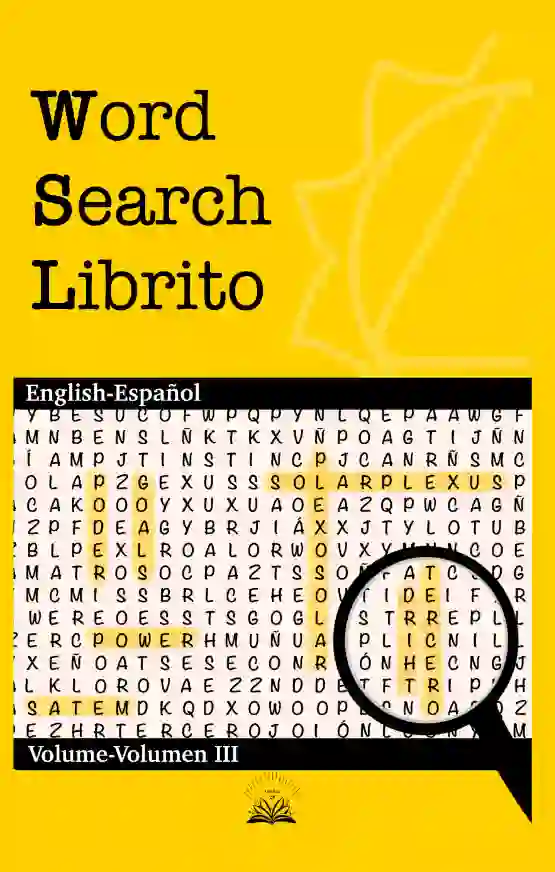
A single letter can change a Spanish verb. That’s one reason Word Search Librito Volume III: The Verb Builder has been an especially valuable part of our editorial learning journey.
With 880 English–Spanish verb-related pairs, the book invites readers to recognize actions and explore Spanish verb forms through word-search activities. Its 2026 edition, published by Libritos ZP, an imprint of Zan Production LLC, includes updated conjugations, refined meanings and a refreshed selection of verbs.
Here’s how Volume III evolved.
The Short Version
| Earlier Editions | Current Edition (2026) | |
|---|---|---|
| Publisher | Independently published | Libritos ZP · Zan Production LLC |
| ISBN-13 | 979-8392219551 | 978-1972801024 |
| Bilingual verb-related pairs | 880 | 880 |
| New verb selections | — | 27 |
| Existing Spanish entries revised | — | 37 |
| Additional English-label refinements | — | 2 |
Where It Started: The Original Verb List
Volume III began with a collection of English action words paired with Spanish verb forms. During its original development, we received translation-review assistance from Professor Rosy Wellborn, whose work contributed to the initial bilingual foundation.
The book’s main approach centers on the first-person singular present tense (the yo form, such as ayudo) and the -ando/-iendo gerund (such as nadando). These forms make many of the entries especially recognizable to Spanish learners, although individual word choices may require additional context.
The workbook records no changes to the 880 pairs between the original list and Edition 2. Later revisions were undertaken independently, with Zan Production LLC responsible for editorial decisions in the current edition. The original review should not be interpreted as approval of subsequent revisions.
Reviewing Spelling and Verb Forms
Spanish verb forms can change with spelling patterns and written accent marks. The 2026 edition revises several entries to improve accuracy:
| English | Earlier Spanish | 2026 Spanish |
|---|---|---|
| Steer | Dirigo | Dirijo |
| Defer | Defiero | Difiero |
| Surprise | Soprendo | Sorprendo |
| Depending | Depediendo | Dependiendo |
| Rely | Confio | Confío |
For example, the yo form of dirigir is dirijo, and the yo form of confiar is confío, with a written accent. These details matter when an activity is intended to reinforce familiar Spanish spelling patterns.
Refining Meaning and Grammatical Fit
Other changes addressed whether the Spanish word matched the English action and grammatical form:
- Drafting: Borrando → Redactando. Borrando refers to erasing, while redactando refers to drafting or composing text.
- Punch: Puño → Golpeo. Puño is a noun (fist); golpeo is a first-person verb form that can express striking or punching.
- Peep: Hecho un vistazo → Me asomo. The revised phrase expresses looking or peeking out, depending on context.
- Found: Encuentro → Encontré. The new Spanish form matches an English past-tense reading of found. Unlike the book’s predominant yo present and gerund pattern, this entry uses the past tense.
Not every English verb has a single Spanish equivalent for all contexts. The purpose of these refinements is to make the selected meaning clearer within a bilingual word-search activity.
Refreshing the Selection: 27 New Verbs
Our comparison of Edition 2 and the 2026 edition identifies 27 new verb selections, alongside two English-entry refinements.
Several earlier selections were less suitable for the book’s intended format. For example, Blurt had been paired with the adverb abruptamente, while Would presented a different grammatical challenge because it functions as a modal auxiliary in English.
The revised selection introduces actions associated with technology, everyday tasks, and the world around us:
| English | Español |
|---|---|
| Download | Descargo |
| Scan | Escaneo |
| Encrypt | Encripto |
| Recharge | Recargo |
| Camping | Acampando |
| Harvest | Cosecho |
Two additional English labels were refined while their Spanish counterparts remained the same:
- Striping → Stripping, paired with Desvistiendo.
- Sail → Navigate, paired with Navego.
These adjustments maintain the book’s 880 bilingual pairs while offering a more varied selection of actions.
Quick Quiz: Spot the Improvement
Volume III: Then and Now
Our Commitment to Editorial Quality
At Libritos ZP, we believe educational resources should continue improving after publication. The latest Volume III edition includes 37 revisions to existing Spanish entries, alongside updates to the English vocabulary selection.
Our editorial approach pays attention to spelling, accents, meaning, grammatical form, and the intended audience. We use language references to inform decisions and welcome constructive feedback from educators and bilingual readers. Because verbs can carry different meanings and grammatical functions, these word-search pairs are vocabulary practice—not a substitute for a complete conjugation guide.
Zan Production LLC oversees editorial decisions and publication of the current edition. Earlier contributions remain part of the book’s history, while responsibility for current selections belongs to the publisher.
What This Means for Readers and Educators
Earlier editions remain part of Volume III’s publishing history and can still be enjoyed as word-search books. The 2026 edition incorporates the latest refinements, including corrected forms and a more contemporary selection of verbs.
For schools, libraries and organizations, we recommend identifying the current edition by ISBN 978-1972801024.
“Every revision gives us an opportunity to learn more about language and create a better experience for our readers. Thank you for learning with us.”
— AZ, Founder · Fundador
Have a suggestion or notice a word we should review? Contact us. Feedback can help guide future editorial updates.
Ready to practice? Explore the Volume III Word Lab.
Get the Palabritaz App
Take multilingual word play with you. Explore word searches, matching games, and custom word lists with Palabritaz.